The 630m transmitter part of the project is showing signs of life!
Well, allow me to self moderate so we don’t get all carried away. The output power is only 3 milliwatts (!) and have mainly been tested on a dummy load. I don’t want to start thinking about the antenna yet, since I fear it may demotivate me and ultimately halt the project for good. I need to focus on one thing at the time, so I don’t get overwhelmed by the complexity and limitations I have ahead.
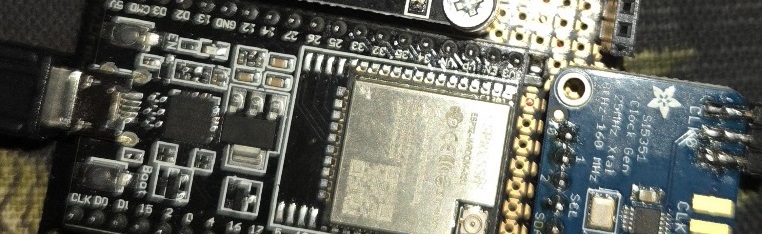
Many changes have been made lately. Mostly new features, but the biggest was probably the reconsideration of which microcontroller to use. You see, I started this using an ESP32, but after spending hours trying to figure out why the LCD display didn’t work, only to realize I’ve somewhat dumbfoundedly ignored basic 3v3/5v TTL logic, I decided to take the easy route and ditch the ESP32 in favour of a traditional Arduino Uno R3. I could introduce logic shifters to the equation, but I had to ask myself this: do I want to add more complexity, or do I want to move forward? I am also aware that this decision might bite me in the ass later.
Anyway, porting the ESP32 code to the Arduino was a trivial task, and getting it up and running was done in one evening session. Here it is mounted to its project box:
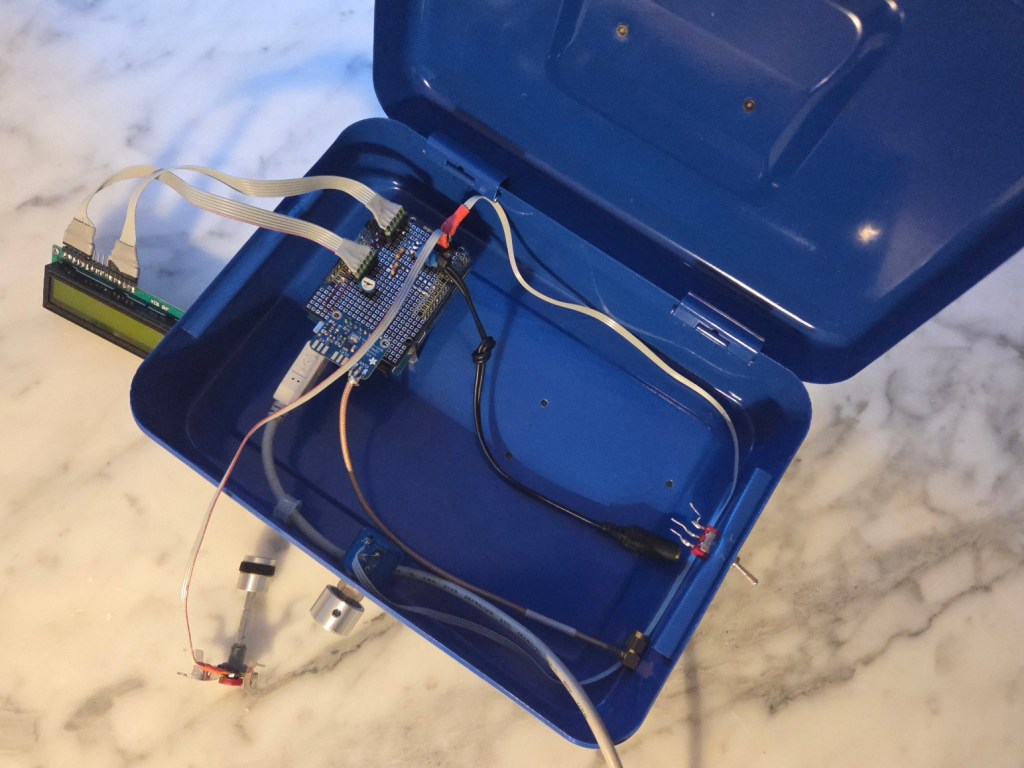
You are correct, it’s a coin box. But hey, it’s cheap, solid metal, and dirt cheap. Welcome home, project.
As you can see I’ve reserved space for the power amplifier board, as well as the low-pass filter which will be introduced later.
The Arduino code now does the following:
- Initialize all components in use (Si5351, timers, GPIO, LCD, etc)
- Read CW speed potentiometer (10k, bottom left, not mounted) to adjust between 10-44 WPM.
- Read frequency multi-turn potentiometer (10k, multi-turn, center mounted) to adjust the frequency from 472.000 – 479.000 kHz.
- Read CW paddle (dit and dah have 10k pull-ups) and enable/disable the clock generator accordingly
- Update LCD whenever a change is made
Additionally, a timer runs in the background to ensure precise timing of the keyer.
I ran some quick tests yesterday, and after knocking out a few bugs, I got it working on multiple bands. 630m, 40m, 20m, which proves that it can easily be adapted to work on other bands – all the way from 2200 meters, up to 2 meters.
It’s now time to build the power amplifier, updates will follow shortly.
 LB5SH.no